Showing posts with label farm. Show all posts

Sunday, November 16, 2014

The Ones Who Walk Away From Suzie's Farm

For the past couple of months I have been getting notices for an event in my Facebook feed and I found it quite interesting.  Not that it was anything that I would ever go to, but because of all the event proposed to be and all of the other people who were interested.  If you are in the know and were one of the 1200 or so people who got an invite to this oh so exclusive event, then you got an invite to it then I hate to break it to you, but the event has been cancelled...kinda.  It does not matter really anyway because of lot of the spectacle was in the events leading up to it.

Let me say a few things right off the bat in the interest of editorial honesty.  Let that be the first thing; that this is an editorial and that I am writing this to offer my opinion on things that happened and I fully accept criticism and contrasting viewpoints.  The second thing that I would like to make abundantly clear is that I am not a vegetarian.  I gladly eat meat but more on that in a few moments.  Finally, let me state that I do not personally know anyone in this debate.  That is to say that I have not met any of these people face to face and that is a large part of why I am going to say what I am going to say about this particular happening.

The event was Death For Food At Suzie's Farm and I am sure that you could see from the title alone, it got a lot of objections.  A lot of people were going to get together and serve a gourmet meal of turkeys and lamb and more.  Chefs from all over San Diego were going to lend their talents to this event and the organizers were going to talk about humane killing of animals.  In the interest of editorial honesty I am not going to write in grandiose terms about killing and murder of animals.  We can see that what most telling about this event is not what is said so much as what is not said and how it is not said.  Bear with me.

We have been down this road so many times and this was simply the last straw for me.  This is the culinary industry's collective "jumping of the shark" moment.  The event is ostensibly cancelled and our  feathered friends may get some reprieve but who knows.  Attendees were ready and willing to shell out $150.00 per person to $300.00 per person should you like to participate in the "harvest" of a biodynamically raised turkey to take home.

The initially $150.00 is for a delightful, I am sure, dinner but my frustration and annoyance comes from the additional $150.00 people were willing to pay for the honor of watching their bird slaughtered in front of them supposedly in the interest of education on the origin of your meal.  This is where we get into terminology.  "Slaughter" is the correct term.  This term is conspicuously absent when we are talking about this event.  The organizer uses words like "harvest" so that people feel better about what they are doing all the while couching the event in the idea that people must confront their idea of what it means to kill what you eat.  If it is slaughter, call it slaughter and reclaim the word.

The event is promoted as an educational event, which, in my opinion, is designed to make it more palatable to the attendees. I would have felt more comfortable with it as an event if they had merely said that it was just a dinner and if one so chose, they could slaughter their own and take it with them for Thanksgiving.  Instead, they chose to say that the point was to make sure that people knew where their food was coming from and what went into its arrival at the table.  Here is where I have to take a swing at a few myths.

Myth #1  People don't know where their food comes from...
People know exactly where their food comes from.  The matters that are at issue now is how much they care or can afford to care.  Aside from once hearing that someone thought that mayonnaise came from plants (and I think/hope that was a joke) no one over the age of ten or so does not know where their food comes from.  The question is and should be how to get people to care and put them in a position where they can make the choice to care.  Ironically, that involves making it more affordable.  When the goal is to get your family fed on a holiday and have that big brown bird with the crispy skin on the table few can afford to keep in the forefront of their minds how it got there, whether it had a big field to roam around in or whether it met a peaceful end.  They have mouths to feed and if anything needs to be removed from the table, it is the notion that this was about educating Americans.

Myth #2  That this was not about the money...
I am a capitalist.  I do not believe that people should do things for free and I never will.  I do believe that charity is charity and capitalism is capitalism and the moment that profit exceeds loss  is when that threshold is crossed. Myth #1 is hard to extricate from this also.  Whether or not the organizers were out to get rich, I do not know enough to say.  I do however know that people were coming out ahead and that everyone involved was going to get more out of it than they were putting in.  Again, I have to say that this is not a bad thing but combined with Myth #1 it is problematic.

Myth #3  This is about reverence for the animals...
NO!  Short and simply put, the moment this becomes about people paying to watch what they eat get killed it crosses the line from reverence to spectacle and there are two sub-myths that accompany that.  The fact that there are 700 million people in the U.S. alone and nearly 8 billion world wide.  I am all for baby steps in positive directions but we have to confront an end game here.  Can we honestly say that these events are helping the cause? I have to say no.  I have to say emphatically no.  That leads me to...

Myth #4  This is about awareness...
One of the main reasons I chose to write this is to open the dialogue.  Organizers of this event said that this was one of the main things that they wanted to get from it.  They wanted people to speak about it and talk about where their food was coming from.  At last look 1500 people were invited.  About 100 responded.  52 said they were coming.  I am not sure how many tickets were sold or who was slated to show, but let's assume that Facebook is in this case reliable.  52 people were going to learn about this event.  52 people were going to show up and participate.  Let's look at the demo of that 52 people.  These were 52 people who were in the food industry.  These were 52 people who could afford to pay that kind of money.  These were 52 people who were able to plan that far ahead and were willing commit to this.
Of course, this is just Facebook and I never saw how many tickets were sold.  Even it were half that are we willing to say that this was an educational event.  I have to admit that I used the word "elitist" in a forum about the event and people said that it was not.  I still cling to the notion that this is the epitome of elitist and the irony is that people were not seeing that.
There was a notion that this was a wide ranging event and that there were huge numbers being reached and lives changed etc. etc.  Maybe not that much but let's call this what it is, a bunch of people who could afford two sitting around drinking craft beer and cocktails ruminating on how wonderful this whole thing is and they are for supporting it.

What smacks the event in the face is that when it poked its head up, people were outraged.  There were people who were outraged on a number of levels.  I was in the camp of people who are meat eaters but saw this as nothing but animals dying for what I called "elitist hipster bullshit" in the guise of social commentary and education.  The average person can't afford this nor would they if they could.  There is no educational value; no positive agenda being advanced.  Without any of that, then it really just killing animals for show. You could save a few hundred dollars yet spend more than you would for a Butterball and have a humanely raised bird at home with your family that you know was raised comfortably and killed quickly.

Then there were the vegetarians, vegans, animal rights people, etc. camp.  Again, in the interest of full disclosure, part of me took glee when they got involved because it proved just about everything that I said above.  This event was going great guns when it was a bunch of people speaking amongst themselves.  That is the nature of elitism.  If you surround yourself with people who tell you exactly what you want to hear, you end up thinking that you are a pretty great person and that everything you think is right because well everyone within earshot thinks the same thing.
I took glee because I was one of the few voices on the Facebook pages saying that it was wrong.  I was shouted down by people saying that no it was great and that people everywhere are going to love this and us for what we are doing.  Wrong.
In case you have not noticed, I have been speaking in pretty generic terms mainly because I don't want to advertise for either side.  No links, no invitations for debate, etc. If you want to find it, it can be pretty easily Googled, just look up Death For Food.

That being said, the other faction showed up pretty quickly and in force.  The only kind of force this group musters on a regular basis and that is petition and protests.  The interesting thing is that these petitions, I found, have no force of law.  So, they were not doing anything but making many people aware that many people did not like this.  Overnight, 2000 signatures.  Those are pretty stark numbers when you could only get 52 people RSVP on Facebook.  Overnight, 2000 plus people were disgusted, threatened to boycott Suzie's Farm, and picket the event.  Overnight, the event fell apart.

The legs fell out from under the thing and we are forced to look at the resulting issues.  Again, keep in mind that the petition does not have the rule of law so there would not be police out there stopping them from doing this event.  Essentially, they caved from public pressure.  Suzie's Farm backed out and without a venue, there was nothing to be done.  Go back to what I said earlier, if the the thing itself were so meaningful, shouldn't the event have gone forward?  Is this not the opportunity to take on a fight that "everyone" thinks should happen?

At this point, prepare to enter the spin zone.  What is the outcome of this story?  I doubt even any of the chefs involved will offer their restaurant for the event because even if it is a full house that will be what they are known for.

Some are considering having the event in private but that leads to how do you get people to attend, shell out the money and again it flies in the face of everything that the event purports to be about; education and reverence for the origins of our food.  "Secret rich people animal killings" does not sound like a promising spin.

The man who organized the protest, is he satisfied?  I don't think so.  Some have labeled him an opportunistic food terrorist.  When all is said and done all is not said and done.

I wrote this because it brought to mind one of my favorite stories.  It is a short story called "The Ones Who Walk Away From Omelas" by Ursula LeGuin (here it is in full.  It is a good and short read) and it poses a very deep ethical question, one that I think is expanded upon here in real life.  Could you live in a town that is absolutely perfect and peaceful aside from one child, sitting alone, starving, crying, and wallowing in its own shit?  In the story, some just walk away from Omelas.

Here, are we ok knowing that every time we eat a chicken nugget, it came from one or several chickens squished together and deep fried not knowing how it/they were treated or do we bring this front and center and charge $300 to see it? Here, some people don't acknowledge it.  Some people walk away.

For more on this CLick!

Wednesday, October 15, 2014

The New CSA: Chefs Invest in Chefs

Want to know how a business should be run?  Listening to the people who do it daily would be a good start.  That is the idea that we are basing our investment strategy on and funneling over $100,000 into the creation of new restaurants and food based endeavors.

We are out to create a community of ownership and internal investment among our members.  We are promoting and supporting profitable entities run by people who know what they are doing.  We are looking for projects based with chefs and food based workers that need a boost and will provide a viable return for 99Knives.

We are funding chefs who have a unique vision for the future of their ventures and solid ideas for how to make them work.  These are people with know-how and will.

Imagine a family of chefs who own their own restaurants.  Imagine the profits from that restaurant goes to support the people who own and run it, providing benefits beyond just a shift meal at the end of the day.

Imagine a community of where the chefs own the farm that produces the food they serve with a knowledgeable and courteous staff.

We are going to make this happen with three restaurants by the end of 2015 and more the following year.

When we think about the ways that we want to grow we think about words like "slow", "steady", "inclusive" and "sustainable".  We are making decisions based on the culture of quality with a diverse range of projects that will feed the whole.  $100,000 is a good start.


Sunday, October 12, 2014

The New CSA: Building the Better Tomato and the Start of the Cycle.

We need to form communities.  Every day I look at tv and social media and I see complaints about
GMO's and Monsanto in particular.  Whatever they are doing, we have to ask why they are so successful and why they are able to capture so much of the food dollars?
Monsanto is able to make a lot of food, relatively cheaply.  Rather, they have been able to make a lot of food more cheaply than the next guy.  The same goes for McDonald's and Taco Bell.  Bad food is more affordable. On the other hand, Whole Foods is not on every corner because good food is expensive.

 The problem is simple and the solution is simple.  Bad food is cheap so it we have to make good food cheap.  We have to provide more of an incentive for people to eat good food, support positive projects, and be knowledgeable about what they consume than the bad stuff.

In the mid eighties and into the nineties, American car sales were abysmal to the point where some were on the verge of failing.  The marketing was focused on buying American cars just because they were made in America.  Fuel prices rose and so did the MPG's these cars and trucks got.  Quality fell.  We were encouraged to buy bad cars that guzzled gas because it was American to do so.  Then Honda hit the market with vehicles that were smaller, better quality, and more fuel efficient.  Essentially, they created a better cheaper product.

We find ourselves in the same position today, except now we are talking about food so it could be argued that the stakes are higher.  We are asked to buy local, which is a good thing.  Sadly though, buying local does not necessarily weigh in when people are considering budgets and thus a tomato, picked in Argentina becomes less expensive and even though it is often picked green and ripened on the trip to the U.S. in a cargo hold flooded with ethelyne gas to make them red by the time they arrive.
We came up with something different.

The Start of the Cycle
We are part of a cycle.  To create a community we had to form a system that was beneficial to the organization and it's participants as well as inclusive.  We started by offsetting our costs for things that we were going to need by gathering them where we could and having others contribute in some way.  We needed good organic soil. The soil and grow medium we use comes from compost.  That compost comes from our members.  As incentive, the cost of their member share is reduced by the amount of compost they contribute on a weekly basis.  A bucket full of compostable material on a weekly basis means a dollar off of their CSA share.  Essentially, you are getting a rebate from you share for your garbage.

We use the composted material as fertilizer and growing medium for our plants and we also donate a large amount of it to local organizations and schools.  Members can even get a bucket or three for their own gardens at home.

Because we collect from so many sources and are instituting vermicomposting as well, we are looking good to have a great deal of compost left over after composting for sale.  Members could even eventually make a profit with their purchase of a share.

This is just the beginning of the cycle!

This is just the beginning of the cycle.


Sunday, September 28, 2014

Why Farm to Table is Dying and We Are Glad To See It Go.

The more that I learn about the farm to table movement and the more that it evolves the more we can see that the bubble is about to burst.  That is a good thing.

Let's be clear, I am not talking about "artisanal" produce and products.  There are some very skilled people out there doing amazing and innovative things.  Even they are going to have to up their game as the sun sets on the basic movement.

See the basic movement was about getting the chemicals out of our food.  The basic movement was about making our food more local and encouraging those local growers to expand their outreach to the people in their local neighborhoods and also encouraging others to get to know them.  The basic movement was about creating a link to our food.  Mission accomplished...kinda.

Whatever else we may believe, we are at the mercy of economics. The result of scarcity is expense and as the movement worked it became more popular and thus less scarce.  Lack of scarcity, lack of expense for the buy means lack of profit and thus those who were out to make a buck are out of line.

What we have ended up doing is promoting something that is so simple and
powerful that it cannot and should not be controlled by a few.  Is Whole Foods going out of business?  Probably not.  Trader Joe's is growing and there are a number of other similar groceries growing also; places where "organic" and "local"

Not to mention the fact that farmers are getting more and more savvy about
what they grow and how to market themselves.  People are growing their own more and they are growing more exotic things, challenging their pallets and their skills, right in their own backyard.

What used to be on the fringe has now become mainstream but unlike Myspace and the pet rock, the movement is not a fad.  It is not like people are getting tired of it and that it is going away.  As is becomes more the norm, it is picking up steam and like any commodity is becoming more accessible and more available to the masses.

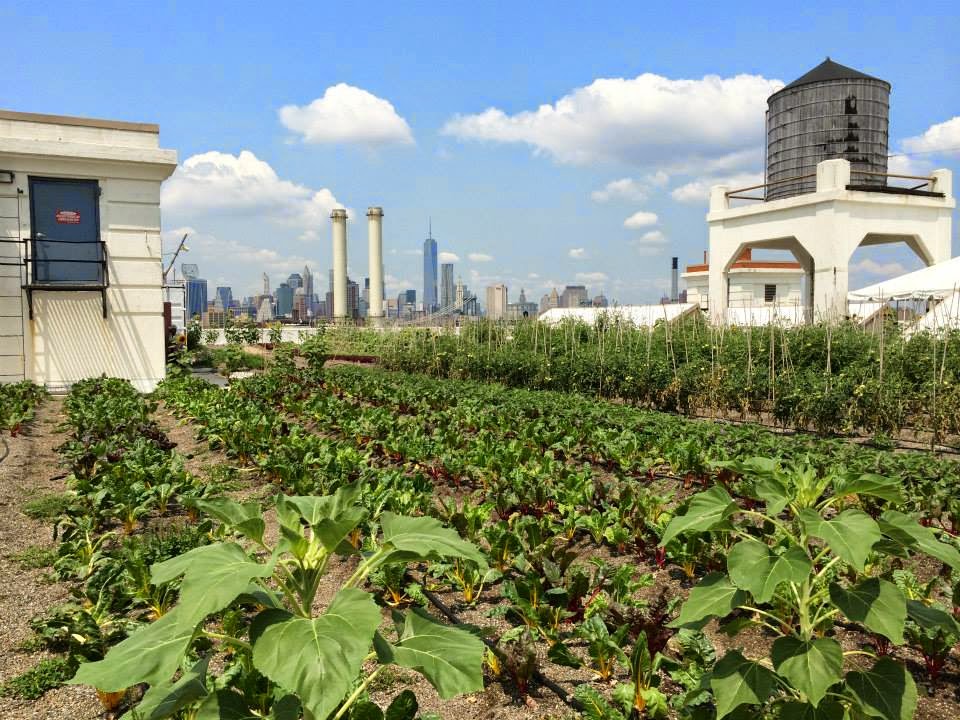
We have a long way to go, for sure, but there is a lot of creativity out there.  There are people commandeering abandoned lots and rooftops for gardens and that is a good thing.  There are people who are fighting the system, and who are making it their actual job to advocate for good and healthy food.  It is no longer in the realm of $100 a plate dinners but often in the cost of a seed and healthy soil.

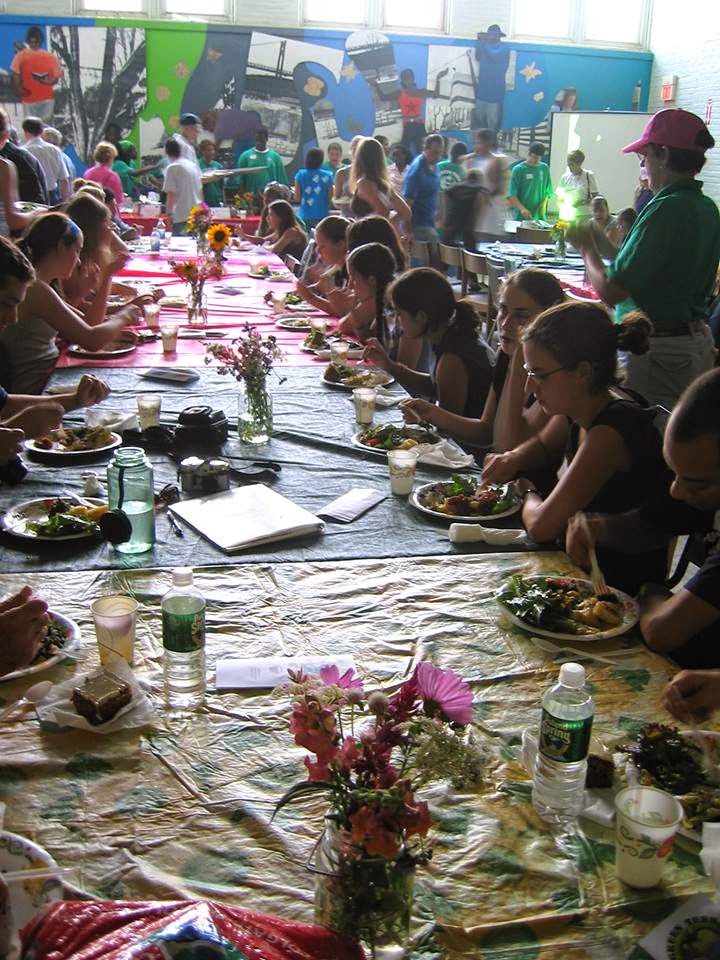
On the other side of this, the pretenders are getting out of the way.  Those who were motivated by profit and fame (such as it is) have to make way for the mother of two who tore up her driveway to make it a garden so that she can feed her children.  Secret underground dining clubs are becoming a thing of the past, in that they are no longer secret.  They are no longer underground.  They are becoming interesting things where people are coming together and expanding their circles; long tables that have water bottles, paper plates and paper cups instead of Spieglau wine glasses and fine china.

When people ask me about farm to table, they speak with a fear. They talk about it like it is something outlandish and in the same vein as driving a Maserati.  Or as if it is something just for the "hipsters" among us.  It just is not the case any more.  Good food is good food and the field is ever widening. So we are seeing the death of "Farm to Table" and the rebirth of farm to table.

Friday, August 8, 2014

Opening My Own Place...You Are Now Leaving The Comfort Zone.

Every great restaurant story has a really great "how I got the doors open" story that precedes it.  Each and every single one.  I am not talking about those stories where someone is given a restaurant or inherits a place.  I am talking about the ones where someone looked at a bare patch of land and constructed something there, and put their lives on the line, or at the very least, their homes.  If the place was hard to get open, there is a story behind it.

When we thought about the kind of place we wanted to see, we (my fiance and I) , thought about our values and the things that we wanted to see out in the world.  Standard operating procedure is to look for something that is missing that you think will make money and put it out there.  There are plenty of things that are missing in the world, and no shortage of people who think they have what it takes.  When we looked at what we wanted to do, we paused to wonder if this was even a ludicrous idea and to consider what we were getting into.

Was this something that we should wait to do?  Were we in a position to do this and still live the lives that we wanted for ourselves.  Then (and this is why I love the man) we reached a conclusion simultaneously that seemed to say it all, "Why not?"

We didn't say it in the #yolo sense, but in the sense that because we are committed to the values that we are going to instill in this place, to not do it and to not do it the way that we wanted to would have meant a somewhat dishonest life.  So it became do we spend the next 20 years hating our jobs and going to and from work only to be miserable and complain about it, or do we spend that time living out values, instilling those values in our children, and generally living with the decisions that we have made.  Essentially we asked if we should be corporate miserable with flashes of happiness throughout the years in vacations or be independent with moments of worry but being able to spend the day with our child teaching her things, being able to leave whenever we want or need, etc.

Each of us come from self made parents who have achieved some success in their lives and each of us then went to college and began to work for massive corporations just like our parents wanted us to.  If I could believe that there was any flaw to my parents methodology for raising me, it's that they didn't want us to do what they did and that didn't encourage us to take those leaps.  Regardless of how we got here, here we are, about to take a massive leap and walking fiercely out of the comfort zone.


This weekend, I am going up to Shasta, CA to look at cows.  I have butchered whole cows and pigs and I have seen them live, but with this new venture I will be responsible for their care and feeding.  The same thing goes for the chickens and the goats and the turkeys and my husband even wants to get a peacock and a peahen.  It goes without saying that when I serve something, I like to know where it comes from.  This way, I will.  Not only will I know where it comes from, I will know what went into it.  I want to know more about my food than most.
People ask me why we are taking such measures so early in the game.  Well, there is a saying that a year from now, you will wish you had started today.  I started yesterday.

Carol Jordan tweets at @9t9knives and can be reached via email at 9of9productions@gmail.com


Monday, July 28, 2014

Why I Am Opening My Own Place...

Reason 1...My Mother Didn't Tell Me Not To

It really came all of the sudden for me, though my mother said that she could see it coming a mile away.  It was the way I would tell her that I was working on a plan to help others with their restaurants.
She said, "mmmm hmmm."
I told her about how simple the plan was and how cool it was going to be work with a bunch of different restaurant owners and industry people.
She said. "Sure dear."
When I found out I was having a baby, I told her about how I was going to work on food systems and health care for people in the industry as well.
She said, "Sounds great, Booba."
I can hear her voice in my head all day, as I am going about my business.  It has been that way since I was a toddler and now, well into my thirties the voice has gotten louder and louder but it is more what she does not say than what she does say.  Her comments leave a lot of things out, a lot of words not said, a void of commentary.
My mother is a font of patience.  She knows that I am going to go headlong into whatever I am going to go into and that when I come out the other side, she will in the nicest and least condescending tone possible tell me what I should have done and what I should do next.  So, when I tell her these things, I wait to hear what she has to say.  It is when she is not forthcoming with information that I tend to worry.

So when I told my mother about the troubles that I was having doing all of the things that I wanted to do and how I thought the best thing to do was open my own place I expected her to say, "Sounds great, Booba." and proceed to ask me about the baby or my fiance.
It was heartening to me that I could not shut her up when I told her.  Her tone seemed to indicate that it was about time that I stopped screwing around and that she had wanted to tell me to do that in the beginning.  When I told her my plan, such as it is, she did not stop offering advice.  She had been running her own place since before I was born and so I gladly took it.  My mother always felt that experience is the best teacher and loves to watch me make my own mistakes with the idea that I will learn much more from the experience than I will from her simply telling me what to do.


Reason 2...Because The Idiots Are Taking Over
We had been leaning towards the idea for some time but with a baby on the way, our feet got colder every minute.  Anger, however warmed them right up.  See, there is a chef, who shall go unnamed mainly because I do not know him personally, who is leading the charge in fucking it up for the rest of us.

Months ago, we had heard about this chef out of Chicago who was doing amazing things.  He was going to start a small restaurant not in the middle of nowhere, but on the cusp of farmland in the Chicago area.  We followed his progress and made attempts to contact him as he worked on his vision with no response.  When he opened, he was promptly closed.  Now a couple of weeks later, he is selling off what he can and making a run for it.

From what we understood he did not even have a business license when he opened.  Months of work and hundreds of thousands of dollars of investment later, the owner is left looking for new tenants and everyone is able to throw their hands in the air and walk away.  No harm, no foul, right?  Wrong.

I was irate at the idea that a movement is taken and turned into catch phrases and profit centers.  There is a scramble nowadays to make the idea of sustainability and environmental responsibility a  money maker and nothing more. Ventures like his, giant flops that are conceived with very little forethought and backed by people with faith in the figurehead person taking the lead, rather than the idea itself are black marks on the rest of our ledgers.  Meanwhile, this particular chef gets to trot off into the sunset.  He may or may not return to the spotlight again, but I don't doubt that he will get hired somewhere and someone will pay him to do whatever it is that he does.  He is one of the Lindsay Lohans of the culinary world and he will be fine.

On some level, we are happy to have people like him around so that we can see the mistakes before hand.  We can see what people are doing wrong, learn from it, and do it correctly the first time.  The trick is going to be doing it right before so many people do it wrong that it ruins it for everyone.

There are many reasons why I am opening my own place, these are just a couple.  A lot of the things I am going to post in the coming weeks and months are going to piss some people off and I think that is a good thing.  There is a lot that needs to be said and much of it, will not be comfortable to hear or read.
We are going to open a place that is the direct result of problems that I have witnessed.


Monday, July 21, 2014

The Passing of Dorothy Pavolka and the Fate of the Farm

Pavolka Fruit Farm is located at the very northern tip of Indiana and was founded in 1920, growing old variety apples with names like transparent, snow, and northern spy.  Now, with the farm just six years shy of a century,  Dorothy Pavolka the lady who has run the farm for so many years, has passed away.

Let me start by saying that I never met the woman.  We had only heard about her and this farm from a friend.  We are looking for farmland and when we were asking around about on place in particular, we were gently nudged in the direction of Pavolka Fruit Farm.

The research that we have, if it can be called that, is very simple.  There were two obituaries written about her in the local papers.  It seems she ran the family farm all of her life.  She had three brothers and two sisters but she alone ran the farm. She has plenty of nieces and nephews. Visitors to the farm said that she knew the place like the back of her hand and she knew everything there was to know about each variety of fruit on the property.

Pavolka Fruit Farm was started at a time when and in
a place where there was not much recorded, written history.  1920 in that area in that time was a place where you were likely to find stills and moonshine runners in and amongst the fruit trees.  There is even a story about the previous owner's family cemetery being located behind one of the barns.  When someone passed back then, they laid them to rest where the family felt best.

The farm is as close as possible to organic without being certified as such.  This was not by some grand organic design based on marketing.  Mainly this is because she did things the
way they had always been done with improvements and modifications made only as she could no longer do them by hand and avoiding pesticides and chemicals where ever possible.  A lot of things were done by hand around the farm for as long as they could be done.  There are no websites, there are no Facebook pages or other social media accounts.  Signs were hand made and advertisements were word of mouth.

From what we understand there are no provisions for her passing.  It was not something that was taken into consideration even though she was 86 at the time of her passing.  At a time when the average age of the average farmer is 59 years old and rising and the family farm is giving way to the massive corporate farms, a lot of owners are seeing that they have no one to follow in their footsteps while simultaneously, it is beginning to make more economic sense for them to sell to or work for a major conglomerate.

On our plate are some rather large issues.  First, how do we encourage youth to get into farming?  Land and equipment are almost prohibitively expensive.  There are number of ideas on the table from providing more scholarships to work on farms to youth, to tenant farmer scenarios to encourage batches of youth to work land that is owned by someone else.  Though the sharecropper term has earned a bad reputation in the Jim Crow south, fairly done, it seems like a viable option for young farmers of today.

Secondly, is it possible to get corporate farms to act more responsibly and in a more environmentally and customer oriented fashion?  Monsanto draws a lot of heat for genetically modified foods, but there are many that would make the argument that they fill a void that is rather large in the world.  There are 7 billion people on the planet and they have to be fed.  Monsanto grows in mass amounts that keep food costs low for many and in their search for a lower bottom line, they have created food as a commodity regardless of its effect on the community.  It's a corporation.  It is doing what corporations do, which is act in in own interests for the sake of the stakeholders.  It does it well.

Third, making food affordable for many is a key and what part does the average person have in that equation?  We throw out, by some estimates, half of what we produce in this country.  Many would say the reason is that we are a wasteful society.  What personal choices should we be making to curb these losses.  Growing our own food and dealing with the political ramifications thereof is another subset of this problem.  A lot of local communities are battling with the idea of whether it is even legal to grow your own food (strange, I know).

Finally, we should return to Dorothy Pavolka.  Like I said at the beginning, I have never met the woman and our condolences go out to her family.  We are talking about a farm though that has been around for nearly 100 years owned by the same same family and meticulously worked mainly by one woman.  She has shown her commitment to the community and to the craft by dedicating her life to it, but what do WE owe HER?  How much of this farm does the community own? (with all due respect to the family we do realize that it is legally and emotionally zero.) Maybe not "ownership", but a responsibility to support it.

So this is not just about the state of the Pavolka Fruit Farm, but the state of the American farm in general. In the coming weeks we are going to explore this topic and what can be done.  How do we bring a farm into the 21st century?

Carol Jordan can be reached at 9of9productions@gmail.com
or on twitter at @9t9knives