We made a commitment for this year. We are working to invest in our neighborhoods and build positive spaces.
What makes a community?
The main thing that we are finding is that everything about a community is a larger part that is made up of a smaller part. The world is made up of countries which are often made of states or territories, and then cities and towns. Towns are made of neighborhoods, then streets then homes then families and people. Smaller and smaller and each relying on the next to keep the whole going.
One of our members noticed a home in an area that we are working in. The home was in a neighborhood that was dominated by condos and newly fabricated homes. This home was in a row of three homes and each had seen better days. Each was in boarded up with "no trespassing" signs on them. The three homes were on the cusp of a disused area. They were the weak links in the chain begin to show. These unused homes are the weak parts of a neighborhood.
So we ask what we can do to strengthen the neighborhood. The goal is to give a sense of ownership and permanence to the people who live in the neighborhood. These are their homes. The best way to create a strong neighborhood is to have these homes filled with strong families and for those families to feel some connection to their community. Putting in more condos do not help. A bright coat of paint does not help. Protests will not help.
We need to pry off the boards covering the windows and repair them. We need to fill those homes with people who love and care for the community. This is our next goal. These are the investments that we are making.
We want to get people into those homes; into these places because they are close to our gardens. We need to invest in our communities.
Home sweet home.
99Knives is a culinary service organization that works to create opportunities for the people within the organization, promote the craft of culinary arts and the hospitality industry overall, and better serve the communities in which we work through charitable endeavors.
Showing posts with label community. Show all posts
Sunday, January 4, 2015
Monday, December 15, 2014
A Community Through Food by Concerned Citizen
A year ago I woke up and went to work. My walk took me past a garden in a "bad" neighborhood. In fact, the Woodside neighborhood of Greenville, SC was rated the 8th most dangerous neighborhood in the country. Every day when I would walk past there, I would see a garden. Rather, I would see what was left of a garden. It had overgrown quite a bit and the more resilient plants were continuing to grow. Okra, tomatoes, and cucumbers were climbing and rising through the weeds and reaching towards the sun. There were a few strawberries that clung to life as well, but nothing really of note.
This garden, it turns out, was meant to support a learning plan for kids in the neighborhood as well as provide some vegetables for the senior citizens home across the street. There was the remnant of a sign that touted the companies who had donated money to see it come to life, but it was now leaning against a wall, its posts tangled with weeds. The raised beds that they had fronted the money for were rotting and straining to contain the weed infested beds. I knelt down and dug my hands in. I could feel the earth give easily and could tell that this garden was not far from having been maintained. It had merely gotten out of control and only recently.
I began to leave work an hour earlier. When I left the house, I would grab my gloves and on my way to work, I would stop and pull some weeds. I would clear some of the brush. I would water things. This was the south and it was the summer and once, while bent over pulling weeds, I saw a shadow moving slowly out of the corner of my eye. Even though it was early in the morning and the sun was just coming up, it was hot and I was already sweating.
The shadow came to me slowly and I saw that it was a woman from the home across the street. She asked what I was doing and I told her that I was just pulling weeds. She was pushing a walker, the kind with wheels and a basket on the front. She asked if I was going to pick anything that was growing there. I had never planned on it so I told her to help herself and even offered to help her pick some of the Roma tomatoes that were stretching across the lawn.
She began to tell me about the garden, about how she could see it out of the window of her room in the home across the street. Then she told me that she didn't have the energy to come out the way she used to but there was a guy who would come and pick the vegetables and then he would walk across the street and sell them to people in the home. He would sell them the vegetables that were supposed to be free to them.
From that day on, I began to look more closely at the neighborhood. I am the type of person who notices more the surroundings rather than the people in an area, so it was really no wonder that I noticed the weeds that were growing before I looked around and saw all of the other things. I saw that there were beer and liquor cans all around. This was the summer and when I took the earbuds out of my ears I could hear the bouncing of a basketball...at six in the morning. It was often kids coming or going from the row houses one block over. Where were they going that early? Where were they coming from that early?

I began to look at some of the houses in the area. There were some for sale and I was in the market for a cheap house. I felt I could handle living in a "bad" neighborhood. I began to look at auction houses. These were houses that had been repossessed and the previous owners had been booted out; victims of the housing crash. There were bullet holes in the windows of some of the homes, but they would likely be bought by a developer all in one go and then leveled. They would be turned into homes that the people who had previously lived there could not afford to live in.
The woman would come back every so often and chat with me while I worked. I liked the company. Soon, she was joined by others; men and women who had been born and raised in the area and who told me stories about what had once been where. Schools they had gone to when they were 8 and the significance of things that were in the area; what had once sat on a particular foundation that was now leveled and gone.
One of the next things that I had noticed what was not there. There were no more cans. I could see out of the corner of my eye while I was working people who would look and keep walking. I suspected these were the people who had once taken tomatoes to sell to the seniors across the street and now, that they saw it was being maintained, thought better and went elsewhere.
I am a big proponent of the "broken windows theory". This is simply the idea that people do not respect something that they come across that is already a mess. If a building already has broken windows vandalism increases and other crimes follow. Unkempt areas cause a downward spiral. Can we admit that there may be an overgrown gardens corollary?
The recent divides in this country over what is going on is based a great deal on location, location, location. Liberal, conservative, Democrat or Republican, Black or White, a lot of what we are encountering is who is where and when. That was an interesting summer because I talked to old and young. Old people who told me that they used to be able to play late into the evening in this neighborhood when they were kids. I talked to young people who said that they were afraid to walk in any neighborhood because of what had happened to Trayvon Martin. We had these discussions though, while gathered around a garden. At the core of these discussions was "ownership" and how many of the old people felt that the neighborhoods had gotten away from them and how many of the young people felt that it was hard to feel a part of any neighborhood where you are made to feel that you do not belong or where you are always about to move. Those who were in the middle? The people my age? They were at work because that is where they had to be.
Someone on some Facebook thread called me silly for wanting to create gardens. They say, not to my face, mind you, but behind the comfort of a keyboard, that gardens don't do anything. I tend to laugh at them. This year we are going to start a lot more gardens and we are going to maintain them. We are goingn fact, the Woodside neighborhood of Greenville, SC was rated the 8th most dangerous neighborhood in the country.
No matter what position you take about what is going on in Ferguson, what happened in NY, or Cleveland or any of the other cases that have been all over the news, whether you believe that it is race or whatever else, I have my theories and I stick by them, there is an ideal place for healing and for change. That place is in the garden.
The interesting thing is that gardens that 99knives supports, produce exactly what everyone wants; better looking neighborhoods, food, occupation for idle hands.
There are ways to help. Donate so that we can buy seeds and more.
If you would like to help us, Join a CSA in your area.
in South Carolina Greenville, Columbia, Charleston...
in Atlanta
contact us at epochpeople@gmail.com
Help us keep the gardens from overgrowing.
This garden, it turns out, was meant to support a learning plan for kids in the neighborhood as well as provide some vegetables for the senior citizens home across the street. There was the remnant of a sign that touted the companies who had donated money to see it come to life, but it was now leaning against a wall, its posts tangled with weeds. The raised beds that they had fronted the money for were rotting and straining to contain the weed infested beds. I knelt down and dug my hands in. I could feel the earth give easily and could tell that this garden was not far from having been maintained. It had merely gotten out of control and only recently.
The shadow came to me slowly and I saw that it was a woman from the home across the street. She asked what I was doing and I told her that I was just pulling weeds. She was pushing a walker, the kind with wheels and a basket on the front. She asked if I was going to pick anything that was growing there. I had never planned on it so I told her to help herself and even offered to help her pick some of the Roma tomatoes that were stretching across the lawn.
She began to tell me about the garden, about how she could see it out of the window of her room in the home across the street. Then she told me that she didn't have the energy to come out the way she used to but there was a guy who would come and pick the vegetables and then he would walk across the street and sell them to people in the home. He would sell them the vegetables that were supposed to be free to them.
From that day on, I began to look more closely at the neighborhood. I am the type of person who notices more the surroundings rather than the people in an area, so it was really no wonder that I noticed the weeds that were growing before I looked around and saw all of the other things. I saw that there were beer and liquor cans all around. This was the summer and when I took the earbuds out of my ears I could hear the bouncing of a basketball...at six in the morning. It was often kids coming or going from the row houses one block over. Where were they going that early? Where were they coming from that early?
I began to look at some of the houses in the area. There were some for sale and I was in the market for a cheap house. I felt I could handle living in a "bad" neighborhood. I began to look at auction houses. These were houses that had been repossessed and the previous owners had been booted out; victims of the housing crash. There were bullet holes in the windows of some of the homes, but they would likely be bought by a developer all in one go and then leveled. They would be turned into homes that the people who had previously lived there could not afford to live in.
The woman would come back every so often and chat with me while I worked. I liked the company. Soon, she was joined by others; men and women who had been born and raised in the area and who told me stories about what had once been where. Schools they had gone to when they were 8 and the significance of things that were in the area; what had once sat on a particular foundation that was now leveled and gone.
One of the next things that I had noticed what was not there. There were no more cans. I could see out of the corner of my eye while I was working people who would look and keep walking. I suspected these were the people who had once taken tomatoes to sell to the seniors across the street and now, that they saw it was being maintained, thought better and went elsewhere.
I am a big proponent of the "broken windows theory". This is simply the idea that people do not respect something that they come across that is already a mess. If a building already has broken windows vandalism increases and other crimes follow. Unkempt areas cause a downward spiral. Can we admit that there may be an overgrown gardens corollary?
The recent divides in this country over what is going on is based a great deal on location, location, location. Liberal, conservative, Democrat or Republican, Black or White, a lot of what we are encountering is who is where and when. That was an interesting summer because I talked to old and young. Old people who told me that they used to be able to play late into the evening in this neighborhood when they were kids. I talked to young people who said that they were afraid to walk in any neighborhood because of what had happened to Trayvon Martin. We had these discussions though, while gathered around a garden. At the core of these discussions was "ownership" and how many of the old people felt that the neighborhoods had gotten away from them and how many of the young people felt that it was hard to feel a part of any neighborhood where you are made to feel that you do not belong or where you are always about to move. Those who were in the middle? The people my age? They were at work because that is where they had to be.
Someone on some Facebook thread called me silly for wanting to create gardens. They say, not to my face, mind you, but behind the comfort of a keyboard, that gardens don't do anything. I tend to laugh at them. This year we are going to start a lot more gardens and we are going to maintain them. We are goingn fact, the Woodside neighborhood of Greenville, SC was rated the 8th most dangerous neighborhood in the country.
No matter what position you take about what is going on in Ferguson, what happened in NY, or Cleveland or any of the other cases that have been all over the news, whether you believe that it is race or whatever else, I have my theories and I stick by them, there is an ideal place for healing and for change. That place is in the garden.
The interesting thing is that gardens that 99knives supports, produce exactly what everyone wants; better looking neighborhoods, food, occupation for idle hands.
There are ways to help. Donate so that we can buy seeds and more.
If you would like to help us, Join a CSA in your area.
in South Carolina Greenville, Columbia, Charleston...
in Atlanta
contact us at epochpeople@gmail.com
Help us keep the gardens from overgrowing.
Monday, November 17, 2014
I Am Somebody and So Are You
This is industry related, I swear...
I have wild hair and I have a piercing in my belly button but I like to think that the similarities between me and the trolls of myth end there. Yesterday I said some things about some things and it irritated quite a few people. To them I say good! I am a living breathing human being and I have a voice. So do you. Use it.
A troll in the internet sense just says things to get a rise out of someone. Trust me, I read the comments sections of a lot of articles. That is not at all what I was doing here. I had some thoughts, I voiced them. I will have many more and no, I will not shut up. Nor should you if you believe in something.
I fear I may have gotten on this person's bad side when I referred to his event as "hipster bullshit". He ended up doing the equivalent of stomping like a child from a room and leaving the conversation when I called him on it. Not before doing the very cowardly thing of lobbing what he thought was an insult. He called me...brace yourselves..."irrelevant". I think his hope was to make me feel small and insignificant. It didn't work.
He said that other people were saying the same thing about me in private messages to him and were basically saying "Who is she?" I am a living, breathing, human woman with an opinion, that's who I am. Why were these conversations going on in the backrooms and corridors of Facebook? Everyone is someone. Everyone has a valid opinion. Moreover the moment I start couching my self worth in what some other person on the internet said about me, is the day...well, I don't know because it is never going to happen.
When I called his event elitist, he denied it. When I said that neither it nor he came anywhere near what he claims he was trying to do, he scoffed. If nothing else his final comments were very telling about who he is and what this event was about.
Everyone has a voice. Everyone has something to say and someone who is trying to educate someone else should be the first to recognize that there is no one who is irrelevant. This is especially true when we are talking about food. Everybody's gotta eat and everyone who ingests food has a vote.
Pam Warhurst of Incredible Edible has a wonderful ideology...
The best thing about Incredible Edible it is that it is inclusive. No one is irrelevant and no one should be out of the loop.
Am I a nobody? No, I am a wife and mother and business owner. I am a daughter, a farmer, and a darn good chef and my opinion matters. So I was really very happy when he said that I was irrelevant. It sealed my faith in myself and proved my point. It was a bunch of hipster bullshit put on by a pretentious douche who puts himself out there as the new every man while simultaneously calling anyone who disagrees with him ignorant and irrelevant.
My husband is a comic nerd who always laughs at this scene from the Avengers. The one where Loki attempts to put his foot down and assert how lowly we all are in his presence...
I get it now.
I have wild hair and I have a piercing in my belly button but I like to think that the similarities between me and the trolls of myth end there. Yesterday I said some things about some things and it irritated quite a few people. To them I say good! I am a living breathing human being and I have a voice. So do you. Use it.
A troll in the internet sense just says things to get a rise out of someone. Trust me, I read the comments sections of a lot of articles. That is not at all what I was doing here. I had some thoughts, I voiced them. I will have many more and no, I will not shut up. Nor should you if you believe in something.
I fear I may have gotten on this person's bad side when I referred to his event as "hipster bullshit". He ended up doing the equivalent of stomping like a child from a room and leaving the conversation when I called him on it. Not before doing the very cowardly thing of lobbing what he thought was an insult. He called me...brace yourselves..."irrelevant". I think his hope was to make me feel small and insignificant. It didn't work.
He said that other people were saying the same thing about me in private messages to him and were basically saying "Who is she?" I am a living, breathing, human woman with an opinion, that's who I am. Why were these conversations going on in the backrooms and corridors of Facebook? Everyone is someone. Everyone has a valid opinion. Moreover the moment I start couching my self worth in what some other person on the internet said about me, is the day...well, I don't know because it is never going to happen.
When I called his event elitist, he denied it. When I said that neither it nor he came anywhere near what he claims he was trying to do, he scoffed. If nothing else his final comments were very telling about who he is and what this event was about.
Everyone has a voice. Everyone has something to say and someone who is trying to educate someone else should be the first to recognize that there is no one who is irrelevant. This is especially true when we are talking about food. Everybody's gotta eat and everyone who ingests food has a vote.
Pam Warhurst of Incredible Edible has a wonderful ideology...
The best thing about Incredible Edible it is that it is inclusive. No one is irrelevant and no one should be out of the loop.
Am I a nobody? No, I am a wife and mother and business owner. I am a daughter, a farmer, and a darn good chef and my opinion matters. So I was really very happy when he said that I was irrelevant. It sealed my faith in myself and proved my point. It was a bunch of hipster bullshit put on by a pretentious douche who puts himself out there as the new every man while simultaneously calling anyone who disagrees with him ignorant and irrelevant.
My husband is a comic nerd who always laughs at this scene from the Avengers. The one where Loki attempts to put his foot down and assert how lowly we all are in his presence...
I get it now.
Saturday, November 15, 2014
A Day in the Life of a Composter
I get asked for meetings all the time. "Hey, let's get coffee" or "Let me buy you lunch!" and these are from friends. Friends who were with me at strategy meetings and potlucks where we talk about veganism (I am a budding vegetarian and yes I have slips from time to time. I love bacon but I digress.) Lately I have had to turn a lot of those requests down. Here is how my day goes...
I am new to South Carolina. I was born and raised in Southern California and my academic advisor told me that there was an opportunity out here to help to build a community and get credit towards my masters degree in Sociology. So, here I am.
The plan is simple and the goal is to answer some simple questions. What is the nature of community? How does one form a community? How does form a community in a first world country. Is it possible to integrate 3rd world mentality into first world community constructs using modern technology. Essentially, how do you get a bunch of Americans to work towards a common goal in real life.
It is not as easy as it sounds in part because of social media and other sociological substitutes. Early villages and towns had early constructs for interaction. Word of mouth and letters were first, of course, but then when we look at how languages evolved and the introduction of the phone, the computer, etc. the foundational elements of societal tribe building brought with it a paradigm shift. People do not get to know each other the way they used to. That is where this project was born and why I now get up at 4 a.m.
I thought about who I am. What are the things that I value. I value the earth, health, nature, helping my fellow human, and sustainability. There is more, but the goal for finding or creating my tribe started with those. I have to eat. I have to have a roof over my head. How do I satisfy these needs in a manner in keeping with my values. I want to live small, cheaply, and sustainably with limited
resources. That means living in a place where I know where my food comes from, where I know my neighbors (hopefully other people working towards similar goals and coming from similar circumstances). The answer...live on a farm with other people who share my ideals.
So we have to set up the farm. It is November and getting cold outside. We have a need to be productive, to get things done even when things are not growing. We need to get things ready to grow.
One of the biggest problems in this state is that it only recycles 29% of its waste. The numbers for food are far worse and we saw this as an opportunity to solve a problem...Two birds, one stone. My desire is to capture a portion of that (we have set a goal of 100 tons which, is a really small amount of what actually goes into land fill and put it to work growing more food; growing other food).
So I get up at 4 a.m. The weather fluctuates here so I dress appropriately, hoodie and work gloves. We get buckets from a deli in Columbia that sets the empties aside for us, though sometimes they are not completely clean so I spend about 20 minutes hosing out potato salad, pickles, and/or mayo. and letting them drain before putting them in my car.
We operate in Clemson, Greenville, Columbia, Moncks Corner, and Charleston. My weekly travels take me literally the length of the entire state. Mondays, I am in Clemson. There are two coffee shops there that donate their spent coffee grounds and most days they are outside waiting for pickup which is great for everyone because it saves the baristas from taking them to the dumpster and it adds both heat and odor control to the compost pile. The rest of Clemson is households who subscribe to our service. We are currently at 104 homes across the state who pay for us to pick up their compostables. We pick up the full bucket on the curb and leave an empty one. Some of our subscribers have started a book trading system, so if they have requested a book in particular, we will leave it or pick it up. Like a library that delivers.
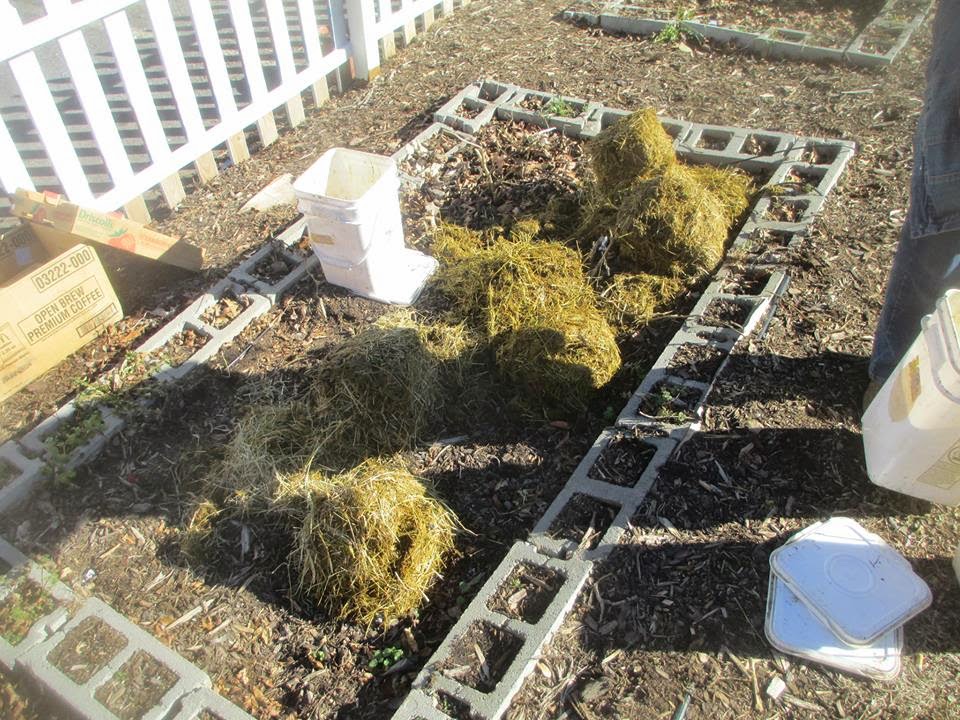
DHEC says that we cannot haul great amounts of garbage since we are not commercial so we carry small amounts and we have Compost Hosts who let us dump the stuff in their yards. We have set up 6 foot by 20 foot compost piles at each of these sites to begin a hot composting process. Each "pile" is no more than 4 cubic feet. Hot composting or active composting means that we get and hold the compost at 140-160 degrees for three days to kill off any harmful pathogens. This causes the compost to cook faster and by flipping, moistening, and aerating the pile, the process gets faster sometimes finished product can be spreadable and ready in about three weeks.
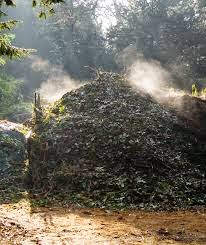
So, we add to the pile, flip the rest, then cover with coffee grounds to quell the smell and cook the stuff underneath. We do this every other day all over South Carolina.
Tuesday it's the same thing in Greenville, then Columbia, etc. Charleston is my favorite. Some days I get to watch the sun rise and contemplate how the sun is on the wrong coast, missing California.
Most days I am done by 8 a.m. and exhausted because I spend so much time during the rest of the day doing other things but mainly my problem is that it is inefficient. We can do better. If you are like me then you have realized that the obvious problem is seven people coordinating schedules to see who will toss the pile who will pick up and who will drop off. With the travel, we are still near our carbon footprint and our compost hosts are more than willing to host an overnight guest so we are not driving tired.
So what do I do all day? I pick up compost, I drop off empty buckets, I dump compost, I flip compost. I repeat...I spend a lot of time talking about it.
There are seven of us right now.
Let's see if we can get more people.
Let's see if we can save more.
Let's see if we can do more.
Contribute to actual change...
https://www.indiegogo.com/projects/completing-the-food-cycle-from-the-ground-up/x/6821972
There is a saying that we have at 99Knives and it is catching on. We are having our "meetings in motion"....Talk with a bucket or a shovel in your hand!
I am new to South Carolina. I was born and raised in Southern California and my academic advisor told me that there was an opportunity out here to help to build a community and get credit towards my masters degree in Sociology. So, here I am.
The plan is simple and the goal is to answer some simple questions. What is the nature of community? How does one form a community? How does form a community in a first world country. Is it possible to integrate 3rd world mentality into first world community constructs using modern technology. Essentially, how do you get a bunch of Americans to work towards a common goal in real life.
It is not as easy as it sounds in part because of social media and other sociological substitutes. Early villages and towns had early constructs for interaction. Word of mouth and letters were first, of course, but then when we look at how languages evolved and the introduction of the phone, the computer, etc. the foundational elements of societal tribe building brought with it a paradigm shift. People do not get to know each other the way they used to. That is where this project was born and why I now get up at 4 a.m.
I thought about who I am. What are the things that I value. I value the earth, health, nature, helping my fellow human, and sustainability. There is more, but the goal for finding or creating my tribe started with those. I have to eat. I have to have a roof over my head. How do I satisfy these needs in a manner in keeping with my values. I want to live small, cheaply, and sustainably with limited
So we have to set up the farm. It is November and getting cold outside. We have a need to be productive, to get things done even when things are not growing. We need to get things ready to grow.
One of the biggest problems in this state is that it only recycles 29% of its waste. The numbers for food are far worse and we saw this as an opportunity to solve a problem...Two birds, one stone. My desire is to capture a portion of that (we have set a goal of 100 tons which, is a really small amount of what actually goes into land fill and put it to work growing more food; growing other food).
So I get up at 4 a.m. The weather fluctuates here so I dress appropriately, hoodie and work gloves. We get buckets from a deli in Columbia that sets the empties aside for us, though sometimes they are not completely clean so I spend about 20 minutes hosing out potato salad, pickles, and/or mayo. and letting them drain before putting them in my car.
We operate in Clemson, Greenville, Columbia, Moncks Corner, and Charleston. My weekly travels take me literally the length of the entire state. Mondays, I am in Clemson. There are two coffee shops there that donate their spent coffee grounds and most days they are outside waiting for pickup which is great for everyone because it saves the baristas from taking them to the dumpster and it adds both heat and odor control to the compost pile. The rest of Clemson is households who subscribe to our service. We are currently at 104 homes across the state who pay for us to pick up their compostables. We pick up the full bucket on the curb and leave an empty one. Some of our subscribers have started a book trading system, so if they have requested a book in particular, we will leave it or pick it up. Like a library that delivers.

DHEC says that we cannot haul great amounts of garbage since we are not commercial so we carry small amounts and we have Compost Hosts who let us dump the stuff in their yards. We have set up 6 foot by 20 foot compost piles at each of these sites to begin a hot composting process. Each "pile" is no more than 4 cubic feet. Hot composting or active composting means that we get and hold the compost at 140-160 degrees for three days to kill off any harmful pathogens. This causes the compost to cook faster and by flipping, moistening, and aerating the pile, the process gets faster sometimes finished product can be spreadable and ready in about three weeks.
So, we add to the pile, flip the rest, then cover with coffee grounds to quell the smell and cook the stuff underneath. We do this every other day all over South Carolina.Tuesday it's the same thing in Greenville, then Columbia, etc. Charleston is my favorite. Some days I get to watch the sun rise and contemplate how the sun is on the wrong coast, missing California.
Most days I am done by 8 a.m. and exhausted because I spend so much time during the rest of the day doing other things but mainly my problem is that it is inefficient. We can do better. If you are like me then you have realized that the obvious problem is seven people coordinating schedules to see who will toss the pile who will pick up and who will drop off. With the travel, we are still near our carbon footprint and our compost hosts are more than willing to host an overnight guest so we are not driving tired.
So what do I do all day? I pick up compost, I drop off empty buckets, I dump compost, I flip compost. I repeat...I spend a lot of time talking about it.
There are seven of us right now.
Let's see if we can get more people.
Let's see if we can save more.
Let's see if we can do more.
Contribute to actual change...
https://www.indiegogo.com/projects/completing-the-food-cycle-from-the-ground-up/x/6821972
There is a saying that we have at 99Knives and it is catching on. We are having our "meetings in motion"....Talk with a bucket or a shovel in your hand!
The Letter We Get Every Year or A Year From Now, You'll Wish You Had Started Today
Given the work we are doing this winter, this seems particularly poignant to post. It is a blog post written by Melissa Arteste and it speaks a good deal to the frustration that a good many of us are feeling today. Read, enjoy, think...--Carol Jordan-McKern
We have gotten the same or a similar letter for the past five years. It will start around April or May and
then they come in rapidly right after all the way until about the end of August. The first time I got the letter, I sprang into action. The second time, I was a little frustrated. The third time, more so, and the fourth and fifth and sixth, etc. I was just downright annoyed.
They tend to start innocently and even honorably enough and go something like this:
"Hi, We are trying to raise money to build a garden/ community garden/ school garden etc. and we need your help to buy x y and/or z"
Mainly they are looking for money for lumber to build raised beds...understandable.
Or they are looking for money for tools... There are other solutions there, but ok.
Or, (and this is the one that really annoys me) they are looking for money to buy compost or fertilizer.
The reason this annoys me the most is because the time to start thinking about this is right now. Not the first warm days after a long winter, but right now as the leaves are setting up to fall and there is very little else that can be planted.
A good time to get into these things is right now. The BEST time to get into these things is right now. We need to get away from the idea that gardening and growing start when the sun is warm and getting high in the sky and when the world is We need to realize that a lot of preparation needs to and can go into the creation of a great garden and especially if it is in a school. The lesson of a garden is in what it means over the long term. The lesson is in what it means when it is not so pretty outside.
The lesson is to go and find a shady place and gather as much and as many leaves as possible. Combine that with as many food scraps as you can find and get to work. Engage in finding other sources of compostable materials. The idea is to get ready for the spring...right now. Get ready and stay ready.
A year from now, you'll wish you had started today.
Friday, October 31, 2014
Keeping an eye out...
This morning, we started at about four a.m. gathering buckets of compostable materials. We are developing quite a routine and more than a few followers. It takes about 3 hours to hit all of our hot spots and as the sun rose and we could only barely see our breath. We stopped for a moment to have some coffee and think about our next move.
We are holding steady across all of our piles at an estimated 8 tons. That is nearly 16,000 pounds of stuff that could have gone into a landfill. We are not fooling ourselves and though we are a pretty competitive bunch, we do not dare dream that our small band of is going to get it all. We are out to get a fair chunk. The curse of this job and this competitiveness is that our eyes are always open. As the sun rose, and people began to stir, as the city began to come to life we saw a man with a pond skimmer. My partner and I looked at each other and thought the same thing at the same time. A few simple questions to the young man and we found out that the park cleans the pond every Friday and that when he is done he dumps it in the dumpster about 50 ft away.
We tipped the garbage can back and felt that it was about 100 pounds. There are fish in the pond and they do not use chemicals to maintain it. Just aeration and circulation. The circulation pump rises out of the water at one corner and throws the water in the air about a foot and shoots it causing a mild whirlpool. The algae that grows during the week, because of the current, collects in one corner where it is very easy to skim off the top. About a 100 pounds a week.
So this is what comes from keeping our eyes open. 100 pounds a week of nitrogen rich mass that would have gone into a landfill is now going into the compost pile and will soon be going to gardens all across SC. We keep our eyes open.
Sadly, there was not a lot that we could do about the pumpkins from Halloween. You win some, you lose some!
Wanna find out more about us and what we are doing? Just sign up for our mailing list!
Sunday, October 12, 2014
The New CSA: Building the Better Tomato and the Start of the Cycle.
We need to form communities. Every day I look at tv and social media and I see complaints about GMO's and Monsanto in particular. Whatever they are doing, we have to ask why they are so successful and why they are able to capture so much of the food dollars?
Monsanto is able to make a lot of food, relatively cheaply. Rather, they have been able to make a lot of food more cheaply than the next guy. The same goes for McDonald's and Taco Bell. Bad food is more affordable. On the other hand, Whole Foods is not on every corner because good food is expensive.
The problem is simple and the solution is simple. Bad food is cheap so it we have to make good food cheap. We have to provide more of an incentive for people to eat good food, support positive projects, and be knowledgeable about what they consume than the bad stuff.
In the mid eighties and into the nineties, American car sales were abysmal to the point where some were on the verge of failing. The marketing was focused on buying American cars just because they were made in America. Fuel prices rose and so did the MPG's these cars and trucks got. Quality fell. We were encouraged to buy bad cars that guzzled gas because it was American to do so. Then Honda hit the market with vehicles that were smaller, better quality, and more fuel efficient. Essentially, they created a better cheaper product.
We find ourselves in the same position today, except now we are talking about food so it could be argued that the stakes are higher. We are asked to buy local, which is a good thing. Sadly though, buying local does not necessarily weigh in when people are considering budgets and thus a tomato, picked in Argentina becomes less expensive and even though it is often picked green and ripened on the trip to the U.S. in a cargo hold flooded with ethelyne gas to make them red by the time they arrive.
We came up with something different.
The Start of the Cycle
We are part of a cycle. To create a community we had to form a system that was beneficial to the organization and it's participants as well as inclusive. We started by offsetting our costs for things that we were going to need by gathering them where we could and having others contribute in some way. We needed good organic soil. The soil and grow medium we use comes from compost. That compost comes from our members. As incentive, the cost of their member share is reduced by the amount of compost they contribute on a weekly basis. A bucket full of compostable material on a weekly basis means a dollar off of their CSA share. Essentially, you are getting a rebate from you share for your garbage.
We use the composted material as fertilizer and growing medium for our plants and we also donate a large amount of it to local organizations and schools. Members can even get a bucket or three for their own gardens at home.
Because we collect from so many sources and are instituting vermicomposting as well, we are looking good to have a great deal of compost left over after composting for sale. Members could even eventually make a profit with their purchase of a share.
This is just the beginning of the cycle!
This is just the beginning of the cycle.
Subscribe to:
Posts (Atom)


